
· by Michael Blair, Nashville's Mobile Detailing
A used car is sold on how it presents. The mechanical condition matters and the records matter, but the first things a buyer or an appraiser sees are the paint, the wheels and the state of the interior, and in our experience a car that looks cared for tends to be taken for one that was. We’d do a pre-sale detail on most cars before they’re sold, and it’s also easy to overdo; the right detail for a car being sold is different from the right detail for a car you are keeping.
What actually moves the offer on a used car?
The interior first. A buyer usually opens the door before walking around the car, and from what we see, a stained seat, a smell or crumbs in the console hurt an offer more than a scratch on the outside does. Carpet and upholstery extraction, a proper clean of every plastic and vinyl surface, the headliner, the door jambs and the trunk is the core of a pre-sale detail, and it is the same work as our interior detail. Odor from smoke or pets can make a car much harder to sell privately, and smoke is the stubborn one.
Smoke leaves a residue that settles into fabric and stays there. In a 2014 PLoS ONE study of thirdhand smoke, cotton and polyester cloth aged for 19 months after smoke exposure still held significant amounts of nicotine and related chemicals, and the researchers found those chemicals could be readily removed from cotton by washing. They tested cloth in a lab, not car seats, and cotton gave up about 41 times as much nicotine in water as polyester, so how much wet extraction pulls out of a car depends on the fabric and on how long and how heavily it was smoked in. Seat fabrics each take their own handling, which our post on upholstery fabric by fabric goes through.
Outside, a thorough wash, a clay treatment to get the bonded contamination off, and a polish to take out light swirls and bring the gloss back is how we handle most of the paint. Clean wheels and dressed tires cost little next to the rest of the job, and so does glass that is clean inside and out, which is what the buyer looks through on the test drive.
What should you skip before selling a car?
A ceramic coating on a car you are selling is, in our view, money spent for the next owner; our post on whether a coating is worth it is written for people who are keeping theirs. A multi-stage paint correction that chases every scratch is more work than we would talk anyone into right before a listing. Repairing every rock chip, replacing a slightly worn set of floor mats and restoring the headlights are worth weighing when the car is otherwise in very good condition and priced to match; on an ordinary car, we usually leave them alone. If the lenses have gone badly yellow, our post on cloudy headlights and whether restoration lasts explains why a polish on its own does not hold and why the coating that goes on afterward is the part to ask about.
We don’t put silicone dressings on a car going up for sale, the kind that leave the dash and the seats shiny and slippery. A glossy interior can look as if it was dressed up to hide something, while a matte, clean finish just looks kept.
An ozone machine is no shortcut for a smell, either. The EPA’s page on ozone generators calls ozone a toxic gas, says that at levels within health standards it is not effective at removing many odor-causing chemicals, and says that where high concentrations are used in an empty space, conditions should be controlled so that no person or pet is exposed. The California Air Resources Board’s fact sheet on ozone-generating purifiers adds that ozone deadens the sense of smell, which disguises an odor rather than removing it. And EPA’s full assessment of ozone generators notes that ozone can damage rubber, electrical wire coatings and fabrics with susceptible dyes, all of which a car’s cabin has. Some detailers still use it; where it is used, it belongs in an empty, closed car that is aired out completely afterward, and only once the fabric, headliner and vents have been cleaned.
- Do: interior extraction, odor removal at the source, jambs, trunk, glass, wheels
- Do: wash, clay, one-step polish, tire dressing
- Skip: ceramic coating, full paint correction, every chip
- Skip: shiny dressings, air fresheners that announce themselves, ozone in place of cleaning
Dealer trade-in versus private sale
We also do reconditioning details on trade-ins for dealer lots, through our fleet and dealer work, so we see the other side of this: a traded car is usually detailed again before it goes on sale. That is why, in our view, a full detail returns less at a trade than at a private sale. A thorough wash, vacuum and interior wipe-down, with the personal belongings out and the smell dealt with, is the level we suggest before a trade; it takes away the obvious reasons to mark the car down without paying for work the dealer will have redone.
At a private sale, the buyer is paying for the car as it stands, and that is where we think the full pre-sale detail earns its cost. It is what the listing photos show, it is what the buyer sees in the driveway, and it can be the difference between an opening offer close to your asking price and one that starts with a list of things wrong.
Timing and the photos
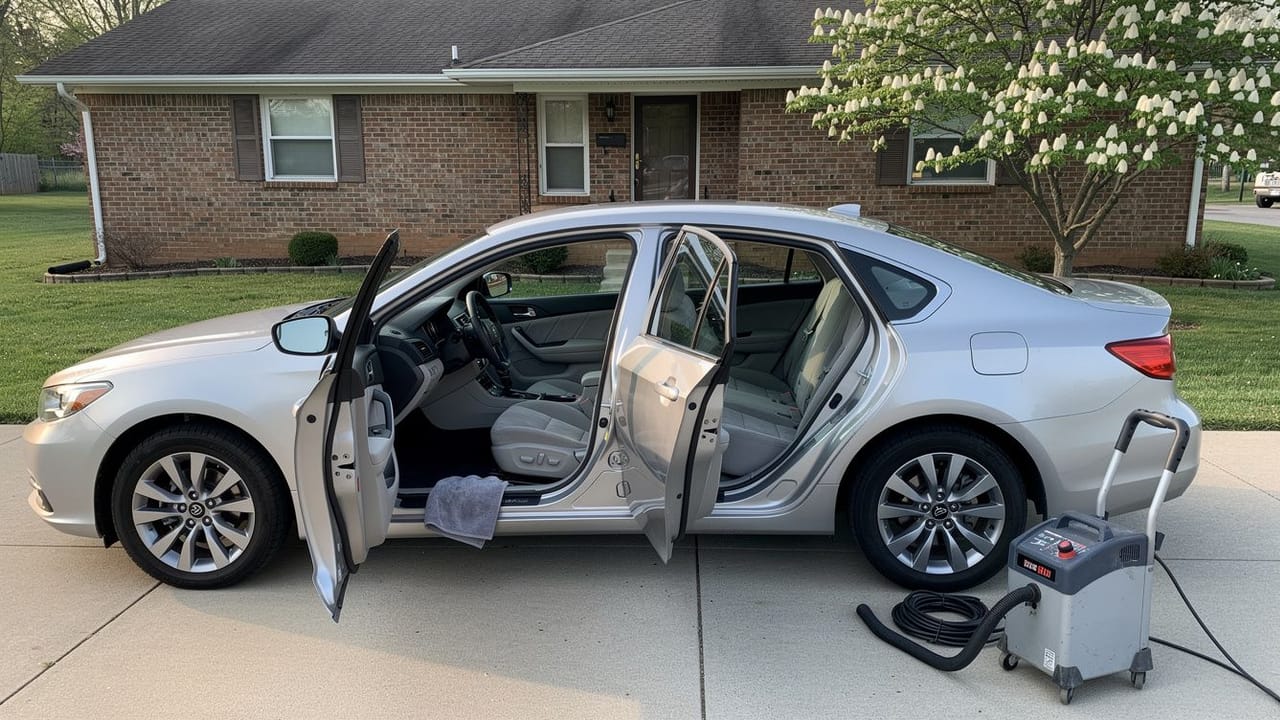
Have the car detailed a day or two before the photographs and keep it garaged or covered until the listing is up. Photograph it clean and dry in open shade or early light, on a plain background, with the interior shots taken with the doors open and the seats visible. Because we work mobile, we come to the house, do the car in the driveway, and it can be photographed on the spot; what a mobile detailer needs from you covers the space, shade, water and power the job takes.
Between the listing and the sale, keep it clean. A quick rinse before each showing, and a vacuum if it has been driven, holds on to the impression the detail made. Put the service records in a folder on the passenger seat, since a clean car and a folder of receipts tell a buyer the same thing. When you have a sale date, ask us for a quote and we’ll book the detail around it.
Sources
- Bahl et al., Thirdhand Cigarette Smoke: Factors Affecting Exposure and Remediation, PLoS ONE (2014) — Fabrics aged 19 months kept significant smoke residue; washing readily removed it from cotton; cotton released about 41 times the nicotine of polyester in water; a lab study on cloth, not car interiors
- U.S. EPA, Ozone Generators that are Sold as Air Cleaners — Ozone is a toxic gas; not effective at removing many odor-causing chemicals within health standards; high levels only in controlled, unoccupied spaces
- California Air Resources Board, Hazardous Ozone-Generating Air Purifiers — Ozone deadens the sense of smell, disguising odors rather than eliminating them
- U.S. EPA, Ozone Generators that are Sold as Air Cleaners: An Assessment of Effectiveness and Health Consequences (PDF) — Ozone can damage rubber, electrical wire coatings and fabrics with susceptible dyes
FAQ
Detailing a Car Before You Sell or Trade It — questions
Is it worth detailing a car before selling it?
For a private sale, usually yes; the detail is what the listing photos show and what the buyer sees when they open the door. For a dealer trade, a thorough clean is enough, since a dealer generally has a trade-in reconditioned before reselling it.
What should a pre-sale detail include?
Interior extraction and cleaning of every surface, odor removal, door jambs and trunk, glass inside and out, wheels and tires, and an exterior wash, clay and light polish. We would skip coatings and full paint correction on a car that is about to be sold, since the next owner gets most of the benefit.
Can a detailer remove smoke smell from a car?
Often, depending on how heavy and how old the smoke exposure is. The residue sits in the materials, so the work is extraction of the fabrics and cleaning of the headliner, the vents and the hard surfaces. Ozone is not a fix on its own: the EPA says it is not effective at removing many odor-causing chemicals and can be harmful to health, so if it is used at all it goes in an empty car that is aired out fully afterward. A smoke smell can make a car much harder to sell, which is why it is worth dealing with first.
How long does smoke smell last in a car?
The residue behind it can outlast a year if nothing is cleaned. In a 2014 PLoS ONE lab study, cotton and polyester cloth aged 19 months after smoke exposure still held significant nicotine and related chemicals, though washing readily took them out of cotton. That was cloth, not car seats, but it is why we extract the fabric.