
· by Michael Blair, Nashville's Mobile Detailing
Modern headlight lenses are polycarbonate, which AAA’s 2018 report on headlamp lens deterioration describes as strong, impact resistant and lightweight. The same report says the lenses are coated at the factory with a thin film for scratch resistance and protection from UV light. That film is what fails. Once it has broken down, the plastic beneath yellows and goes hazy, and in AAA’s lab testing the deteriorated low beams put out only 22 percent of the light of new factory headlights.
Why do headlights turn cloudy?
AAA puts the wear down primarily to long exposure to ultraviolet light and abrasion by road grit. What the sun does to plastic with no protection left is laid out in a CSIRO study of UV damage to polycarbonate glazing: the material breaks down and yellows, and as the surface erodes it turns uneven, so it scatters light and the haze builds.
AAA found that polycarbonate lenses begin to yellow and show their age at about five years, give or take two. That is a national figure from a small test, and we know of no separate measurement for Tennessee cars. The damage starts at the surface, which is why it can be sanded off. It is also why it comes back, because AAA describes the professional process as sanding away all of the original protective film along with the yellowed plastic.
What does headlight restoration do?
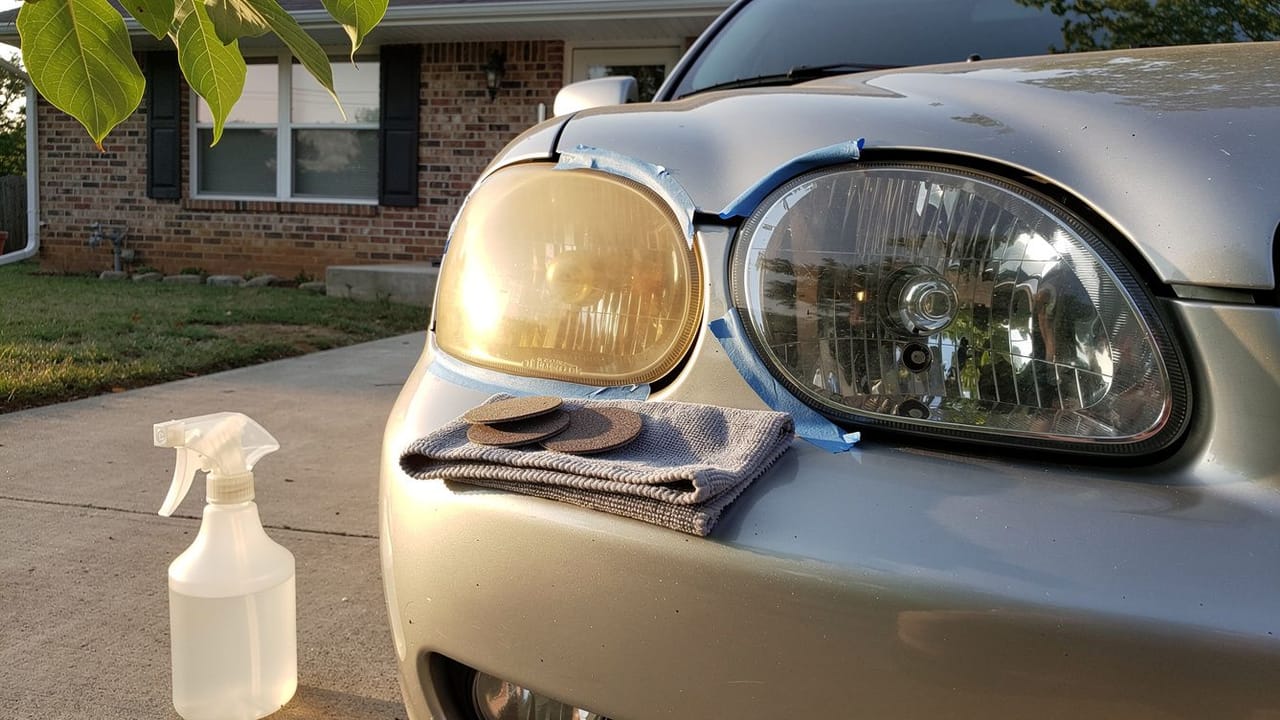
Restoration is sanding and polishing. In AAA’s test the professional took the old film off with 320 grit, then worked up through 600, 1200 and 2000 grit discs. It helps a lot without making the lens new: restored lamps averaged about 70 percent of a new factory headlight’s output, up from that 22 percent, and none of them fully met the federal headlamp standard. The professional job measured 73.4 percent and the do-it-yourself kit 69.2 percent, a small gap from a test of only two car models. The clearer difference was what each one put on afterward, a protective film cured hard under UV light for the professional and a spray-on protectant for the kit.
Once sanded, the lens is bare polycarbonate. Coating makers writing in a 2012 RadTech paper on weatherable hardcoats say uncoated polycarbonate scratches easily and yellows in less than a year in sunlight, which is why a factory lens carries a hardcoat in the first place. A restoration that stops at the polish has put the plastic back in the state it was never meant to be left in, and that is why so many seem not to have worked.
- Mask the paint around the lens
- Wet sand through several grits to remove the oxidation
- Machine polish to clarity
- Apply a UV-blocking clear coat to replace the factory protection
Why does the coating matter after restoration?
After polishing, the lens needs a new UV barrier to do what the factory hardcoat did. When federal regulators set the rules for plastic headlamp lenses, the 1994 final rule in the Federal Register noted that without a coating, plastics such as polycarbonate will quickly fail the haze test. How long an aftermarket coat lasts is mostly a matter of what its maker claims. The film in AAA’s professional restoration was advertised to last five years and the kit’s spray claimed one, and AAA reported both claims without testing either.
So when you compare prices, the coating is the line to read. Ask what goes on after the polish, how it is cured, and how long its maker says it holds up. If the car is about to be sold, weigh it the way our post on detailing a car before you sell it does, against what a buyer will actually pay for.
When restoration is the wrong answer
Some lenses are past sanding. The CSIRO researchers found that a UV-damaged polycarbonate surface becomes prone to crazing, embrittlement and spreading cracks, and the RadTech paper lists cracking of the coating or the plastic itself among the ways a coated lens fails. Haze on the inside of the lens is out of reach of anything done to the outside. For those, replacement is the answer, and in AAA’s test new factory assemblies gave the best combination of light and compliance with the standards. We look for cracks and inside haze before we quote, and if they are there we will tell you rather than sand.
Prevention is the coating again, plus less sun. Since UV is the main cause, a garage or a shaded spot does the most good, and the same sun is hard on paint too, as our post on Nashville sun and pollen explains. AAA also advises restoring or replacing headlights as soon as they start to show their age, and having them re-aimed afterward. If yours have started to yellow, ask us for a quote and tell us what the lenses look like. What the rest of a detail costs here is laid out in our mobile detailing guide.
Sources
- AAA, Headlamp Lens Deterioration (December 2018) — Polycarbonate properties; factory UV and scratch film; UV and road grit as main causes; yellowing at five years plus or minus two; 22 percent output deteriorated; restored about 70 percent (73.4 pro, 69.2 DIY); none fully compliant; grit steps; pro film claimed five years, kit spray one year; OEM replacement best; restore or replace early and re-aim
- CSIRO and RMIT, The Effects of Ultraviolet Radiation on Polycarbonate Glazing — UV breaks down and yellows polycarbonate; uneven surface scatters light and adds haze; crazing, embrittlement and cracking
- RadTech 2012, Radiation Curable Hardcoats with Generally Improved Weathering Performance (Haubrich, Mordhorst, Slocum) — Uncoated polycarbonate scratches easily and yellows in under a year in sunlight; lenses need a weatherable hardcoat; cracking among failure modes
- NHTSA final rule on plastic headlamp lenses, Federal Register, November 2, 1994 — Uncoated polycarbonate quickly fails the haze test; coating plastic lenses is industry practice
FAQ
Cloudy Headlights and Whether Restoration Lasts — questions
How long does headlight restoration last?
It depends largely on what is applied after the polish. Coating makers say uncoated polycarbonate yellows in less than a year in sunlight. In AAA’s 2018 test, one professional film was advertised to last five years and one kit’s spray claimed one year, though AAA did not test either claim. Ask what coating is used before comparing prices.
Do headlight restoration kits work?
In AAA’s 2018 test, a do-it-yourself kit brought badly yellowed headlights back to an average of 69.2 percent of a new headlight’s output, close to the professional result of 73.4 percent. Its UV protection was a spray-on coat that claimed to last a year. That was one kit on two car models, so treat it as a guide rather than a verdict.
Can cloudy headlights be fixed if the haze is inside?
Not by polishing. Restoration removes damage from the outer surface of the lens only, so haze or fogging on the inside is out of its reach. That headlight needs a closer look, and replacing it may be the answer.
Should I restore or replace my headlights?
Restoring helps a hazy but sound lens: in AAA’s 2018 test, restored lamps averaged about 70 percent of new output, though none fully met the federal standard. New factory assemblies gave the best mix of light and compliance. A cracked or crazed lens, or haze on the inside, is a replacement rather than a restoration.